
“Confessional booty”
The ruler decides the confession
Using theological persuasion and military pressure, Bern supported the conversion of the cities of Geneva and Lausanne to Protestantism during the Reformation.
In the sixteenth century, the confession of a region was bound up with political power relations. Subject territories were required to adopt the confession of their territorial rulers.
In the dispute at Lausanne, Bern took the side of the city, which wanted to be rid of the bishop as its territorial lord and convert to the Reformation. The city would have liked to keep the cathedral’s valuable church treasury, but after a prolonged back-and-forth, it was forced to yield to pressure from the more powerful Bern.
A cathedral treasury Is expropriated
The bishop’s ecclesiastical silver, liturgical vestments, and secular textiles were transported to Bern.
The city of Lausanne, the cathedral clergy, the bishop, and the Bernese council contested ownership of the cathedral treasury. Various inventories were meant to prevent theft and provide an overview of the assets involved—though this was not entirely successful.
Bern transported eighteen wagonloads of church property back to Bern, including the four tapestries depicting the story of the Roman general Julius Caesar. This is documented by an entry in a contemporary inventory.
How to party without pomp?
After his defeat at the Battle of Grandson 1476 the wealthy prince Charles the Bold found himself lacking suitable decoration for the celebration of Easter in Lausanne.
In the Battle of Grandson, the duke lost his entire camp—everything from barrels of salted herring to his personal state seal. He therefore also lacked fancy tapestries to serve as decorations to stage a festive celebration of Easter in Lausanne’s Cathedral. He asked relatives for help, and probably also his courtier Guillaume de la Baume or Guillaume’s brother.
As part of the Easter service, the duke announced the betrothal of his daughter and sole heir Mary of Burgundy to Maximilian of Habsburg and needed suitably impressive furnishings for the occasion.
Forgotten in church?
A wealthy courtier would certainly have lent tapestries to his lord. But why did de La Baume never reclaim them?
The 1536 inventory confirms that four tapestries depicting the triumphs of the Roman general Caesar and bearing the coat of arms of the de La Baume family were transported from Lausanne to Bern.
The deeds of ancient rulers were a popular pictorial theme at the Burgundian court.
Presumably, the Burgundian courtier lent the wall hangings to his lord Charles the Bold for the Easter celebrations of 1476. But why did he not take them back? Did they belong to his brother, who died at the Battle of Grandson? Or did the bishop simply refuse to hand the precious textiles back?

Propaganda with Antique heroes
War lords as role models
Charles the Bold found role models in ancient generals and rulers.
The Burgundian dukes used tapestries with figural scenes as decorations through which political messages could be broadcast to the court and visiting dignitaries. Charles the Bold owned a multi-part series of wall hangings depicting the deeds of Caesar. It has been lost, but likely resembled that of the de La Baume family.
Caesar was portrayed as a successful general, victorious in perilous battles. His clothing and weaponry, however, follow late-medieval fashion—the past appears dressed in the garb of the present.
Displayed in Bern’s townhall
In Reformed Bern, the seized tapestries were guarded under lock and key in the town hall.
In 1754, the “Burgundian spoils” from the townhall archive were publicly displayed: a unique event. The city councilmen had to decide what would become of them, and the public was now permitted to view these wondrous attractions. Even a newspaper from Zurich drew readers’ attention to this exhibition.
With their life-size Roman figures and scenes, the tapestries were said to be executed with great artistry.
While the tapestries remained in the town hall, the city councilmen considered selling off the “Burgundian” ecclesiastical vestments.
Cultural education for politicians
For the regular assemblies of Switzerland’s highest-ranking politicians and for foreign envoys, Bern tried to present itself in the best possible light.
Every six years during the first half of the nineteenth century, international diplomats and delegates from the cantons gathered in Bern to address national political affairs at the “Tagsatzung” (Federal Diet).
On the occasions of these major political events, the city provided an extra accompanying cultural program including an exhibition of contemporary art and one showcasing the latest achievements in Swiss industry and trade.
In the choir of the Minster Franz Sigmund Wagner arranged an exhibition of the “tapestries [wall hangings], knightly garments, and mass vestments” captured from Charles the Bold.
Wall hangings for politicians
Bern’s captured medieval wall hangings were used as a backdrop for the opening ceremonies of the Tagsatzung (Federal Diet).
The Flemish tapestries were moved from the Minster and displayed in the Church of the Holy Spirit for the opening ceremony of the Tagsatzung.
The tapestries were trophies acquired “with the blood of the fathers,” that officials placed on the floor so that the feet of the Confederacy’s current representatives could now “rest once more”. A pleasant thought, as the federal correspondent remarked in 1804. The church commission responsible for the tapestries’ safekeeping, however, objected: henceforth, the tapestries would only be lent out for use as wall decoration, no longer as carpets on the floor.
Booty on parade
Commemorative processions marking historic events made it possible for participants to experience history firsthand and to cultivate patriotism—a colorful pageant of costumes, imitations, and genuine spoils.
In 1853, a lavish procession with historical costumes was staged to celebrate 600 years since Bern’s entry into the Swiss Confederacy.
The organizers hoped that the men and boys of Bern took on the roles of their heroic forebears would inherit their virtues. The festive procession concluded with a display of captured war spoils, featuring a “booty cart.” The Caesar tapestries served as the model for the reconstructed tent of Charles the Bold displayed on the cart. We can discern their influence in the faint drawing in the album where we spy the seated Roman ruler (facing the opposite direction as on the tapestry, but clearly derived from it).
Authorities administrate war art
The spoils of war as municiple resource
State treasures were kept in the town hall’s archival vault: money, charters, promissory notes, and, remarkably, looted textiles.
Thick walls and a stone vault protected the Bernese government’s treasury. The “upper” vault housed a large cabinet in which the “state antiquities” were kept — predominantly textiles captured in wars and confessional conflicts.
These secular and (formerly) sacred objects no longer had any practical function within the early modern Bernese state. They now functioned as cultural capital — as a repository of value, as a symbol of triumph recalling past military greatness, and as “art.”
Achivists investigate the inventory
When a new city official took office, he was required to review the treasury’s inventory with the outgoing official. The incumbent and his successor examined the register together. In this manner, two sets of eyes maintained an overview of the city’s riches and made sure that nothing went missing.
The person responsible for the archive rooms, the “registrar,” had to draw up an inventory of the books, charters, promissory notes, and state antiquities kept there before any handover of office. In the presence of a scribe, “all carpets, vestments, canvases, and flags were unpacked,” recorded on the list, and packed away again.
Only when this procedure was completed did the incoming official receive the keys. This process reveals how the administration maintained control over Bern’s spoils of war. Creating these institutionalized inventories was a key step in transforming war booty into cultural heritage and establishing official cultural narratives and identities through the institutional control of objects.
The authorities weed out the treasury
The authorities classified the looted objects according to their own criteria. They sorted out and disposed of things that seemed useless to them.
In the eighteenth century, the Bernese council ordered that the stored Burgundian spoils be arranged according to the principle of “like with like.”
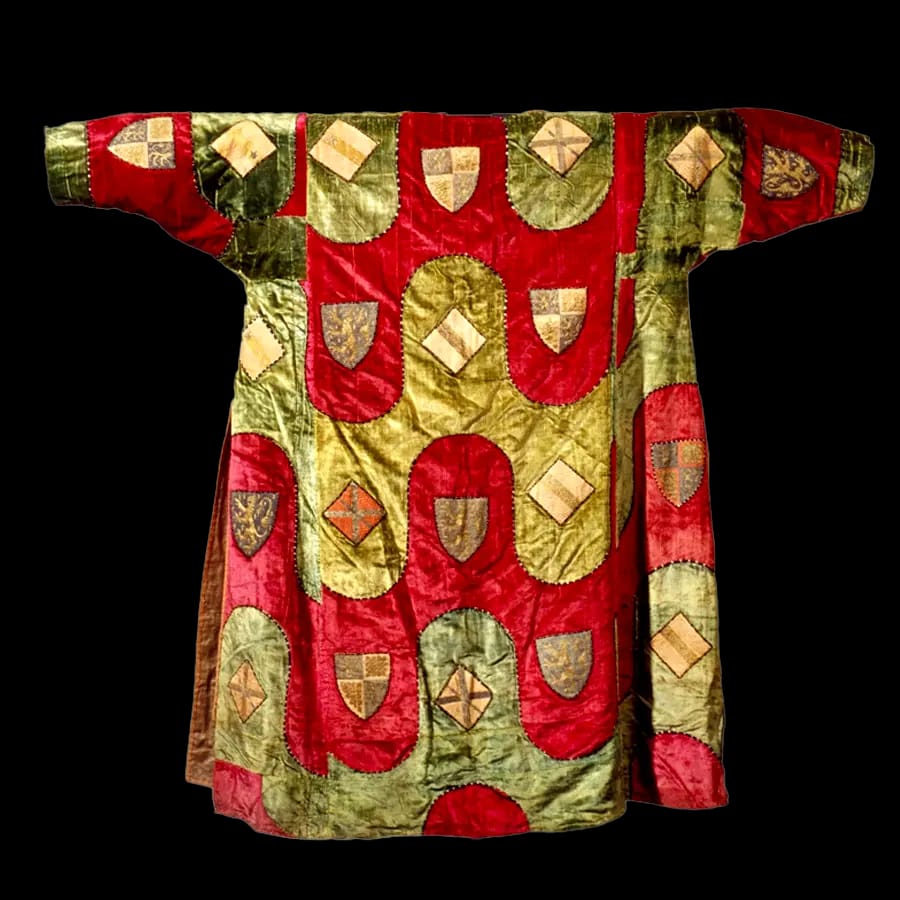
Flags went to the arsenal. Medieval white linen cloths were placed at the hospital’s disposal. The ecclesiastical textiles were to be examined to determine whether it would be financially viable to unravel them and recycle their metal threads. The council records contain no indication of this having been carried out. The magnificent medieval tapestries were once again carefully packed and put into storage. We cannot reconstitute what the city council did, in effect, sort out. This will forever remain a gap in the historical record.
Fear of pests
The city’s concern about the preservation of its captured textile treasures attests to their growing significance as cultural heritage.
The authorities were concerned about dampness and vermin in the archive rooms of the town hall and began looking for a better place to store the textiles. Initially, they considered moving the pile of “carpets, altar decorations, and vestments” to the arsenal.
They were said to be monuments to the victory over the Duke of Burgundy, remains of the pre-Reformation Minster treasury, and other ‘accoutrements of ’ päpstlichen Mummereien”—a pejorative reference to Catholic “theatrics”.
In the end, however, they chose the dry and clean sacristy in the Minster. A new inventory list documents the 86 objects transferred there.
Ancestral heritage: a burden or delight?
An inheritance full of holes
The condition of the captured textiles became a political issue. Time, it was said, was eating holes into the cultural heritage.
In Bern, the Flemish wall hangings allegedly captured at the Battle of Murten were hung in the Heiliggeistkirche for the opening festivities of the Tagsatzung assemblies. Their condition must have been worrying by 1834. A polemical newspaper report at the time suggested that framed diplomatic letters could be hung in front of the tapestries to conceal their many gaping holes.
This demonstrates that the use of the wall hangings as programmatic propaganda was not endorsed across the political spectrum.
A history museum for Bern
For a long time, historical exhibits only existed as an auxiillery “add-on” to other collections—in the city library, the Antonierhaus, the arsenal, or the minster.
It was not until 1881 that men interested in history and heritage in Bern joined the historical objects previously kept and displayed at various locations in one location. They founded a distinct institution — the first ‘Historisches Museum’ for the city.
The natural history holdings, as well as the works of painting and sculpture, had already been channeled into individual museums: the Natural History Museum and the Art Museum. The impetus for founding a historical museum came when a famous collection of Swiss cultural heritage was sold at auction and many objects went abroad.
Should cultural heritage be sold?
In 1882, Bern sought to shore up its strained finances by selling medieval ecclesiastical embroideries.
The main hall of the new Historical Museum was adorned with the large wall hangings, all of which continued to be classified as Burgundian booty.
The medieval ecclesiastical vestments were evidently held in lower esteem. A progressive newspaper even proposed selling them off in order to shore up the city’s finances.
The tapestries “captured with the blood of the ancestors,” by contrast, were said to be of inestimable value and inalienable.

Fighting decay with needle and thread
Women darn the holes in history
Conserving textiles remains, to this day, largely women’s work.
The history of museums is highly gendered. Men founded and directed museums, such as the Historisches Museum Bern, established in 1881. They researched the collection, combed through archives, excavated archaeological sites, and published scholarly research.
Conserving textiles, by contrast, was largely women’s work. The wives of directors and curators sometimes repaired ecclesiastical textiles.
Larger commissions were given to professional specialists — embroiderers and seamstresses. In Bern, the costs for this were initially borne by wealthy private individuals. Gradually, the guilds and the city also began to contribute.
Untangling, washing, and mending
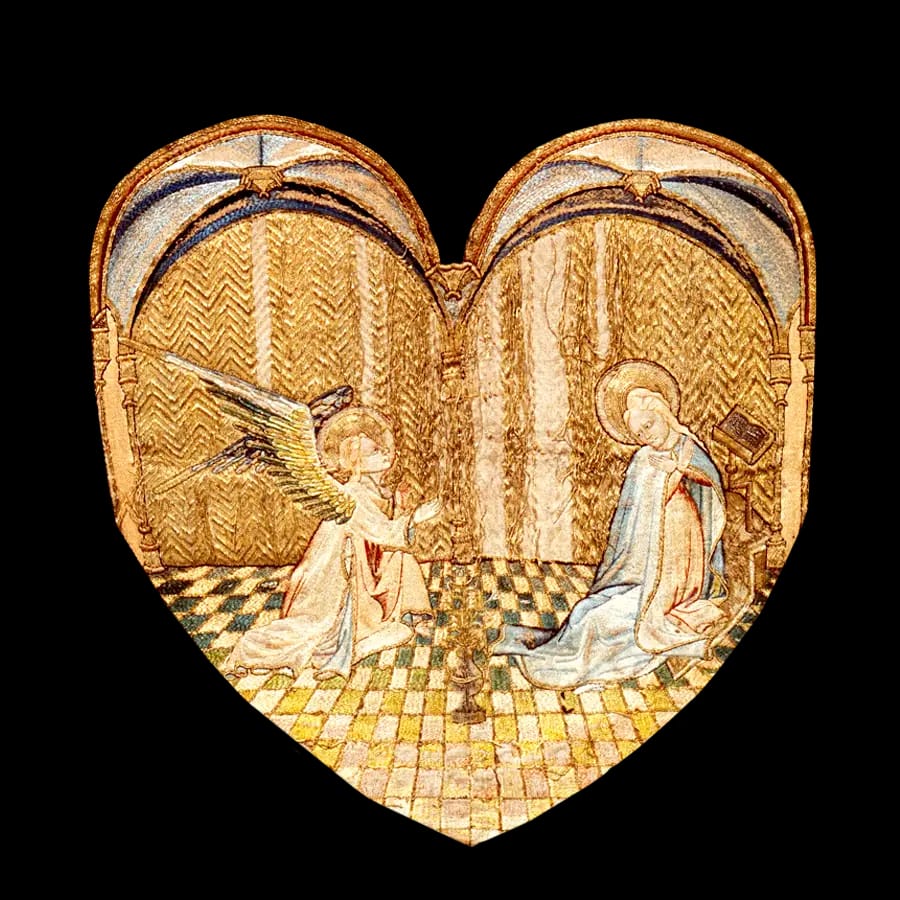
The embroiderer Maria Mürset disassembled an altar hanging (Glossary?) from Königsfelden in 1898. She removed the lining material and filled in holes in the textile.
Maria Mürset worked on multiple occasions for the Historisches Museum Bern as a textile restorer. She disassembled a 14th-century antependium into its individual layers and cleaned each separately. She separated the embroidered figures from the velvet ground fabric and removed medieval pieces of parchment that had been used as padding between the base and the appliqués.
After washing the textile pieces, she reassembled them. Where something was missing or only partially preserved, she supplemented and unified the object. Her restoration work aimed to create a seamless and uniform appearance.
New threads for old heroes
For decades, the seamstress Katharina Bühler worked on the late-medieval tapestries captured by the Bernese.
For 15 years, Bühler restored three of the four Caesar tapestries. The cost was calculated based on the size of the tapestries (Tapisserie), not on its condition. The materials required — that is, the wool used to reweave the damaged areas — were invoiced separately.
Modern woolen threads reinforced or replaced the medieval weft threads (Schussfäden) that had become brittle. Around eight percent of the third Caesar tapestry, measuring 32.5 square meters, was rewoven.
Can an aging process be slowed down?
Light and prolonged hanging damage textile objets. When they are rolled up and stored a dark depot, they are well preserved (konserviert), but they tend to disappear from cultural memory.
Since the Flemish tapestries (Tapisserien) have been on permanent display in the museum, they have required a comprehensive conservation treatment roughly every 60 years. The most recent campaign is scheduled to conclude in 2027.
Using laid stitches, appropriately dyed pieces of fabric are attached to the back as support. Finally, a fully sewn-on lining increases the textile’s stability during handling and prevents further distortion and damage.
Medieval tapestries were made for occasional use, not for permanent display in a museum. How long can good conservation delay their decay?

Just for kings?
Portable propaganda for traveling princes
The Dukes of Burgundy (Burgunderherzöge) traveled frequently with their court. Luxurious wall hangings could be rolled up and moved when the dukes were traveling. Luxurious tapestries provided a convenient means of transmitting political messages on the road.
Tapestries (Tapisserien) were the princely medium of representation par excellence in the late Middle Ages. Wall hangings could transform spaces into festival halls, whether church choirs, castle halls, or large tents.
At official meetings, tapestries were selected to underscored political concerns and impress guests.
Transporting tapestries, however, was a logistical challenge and risky in wartime. In the battles of 1476, Charles the Bold lost many tapestries and was unable to procure replacements of his own in time, for instance, for celebrations he wanted to hold in order to announce the marriage of his daughter.
The “tent of Charles the Bold” in Bern’s Minster
From spoils to exhibits: the captured “tent tapestries” of Charles the Bold Karls des Kühnen were an attraction in Bern in the early 19th century.
During meetings of the federal diet (Tagsatzung) the public could view the “cloths, vestments, and other interesting objects” of Charles the Bold daily from 8 a.m. to 7 p.m. in the choir of the Minster.
When the the Ancien Régime fell in 1798, Bern lost control of the Vaud and Aargau regions. By way of compensation, the city mobilized objects loaded with ideological meanings in order to glorify the past. To this end, objects that had been confiscated from churches during the Reformation — including the Caesar tapestries — were cast as Burgundian booty, part of the triumphant history that Bern’s patrician caste wanted to celebrate.
Many of the spoils were said to have been seized directly from the tent of the Duke of Burgundy. This tent was staged again and again in processions and exhibitions.
State Banquets in the Museum
In 1965 and 1968, the Swiss Federal Council hosted state banquets for kings in the museum, in front of the wall hangings depicting the story of Caesar.
The Federal Council had requested permission to hold the state banquet in the museum on the occasion of the visit of the Danish royal couple in September 1965. The museum’s board of trusties resolved: “Comme les Bernois aiment les rois, il me semble qu’on ne peut pas refuser” (“Since the Bernese love kings, it seems to me one cannot refuse”).
The elaborate preparations required the museum to close for three days. Once again, kings dined in front of the grand tapestries which the Bernese had taken as booty, but which were now staged as Swiss cultural heritage.
Colors fade in the light
The longer textiles are exposed to light, the more they fade — even in a museum.
In the medieval and early modern periods, tapestries were usually hung only for special occasions. In modern museums, however, there was a desire to display these prized showpieces at all times and make them accessible to everyone. Daylight, however, damages the textile fibers and bleaches the colors. The Caesar tapestries had been on almost continuous display since the opening of the Bernisches Historisches Museum in 1894 until 2008 — until 1985, they were even exposed to daylight.
A comparison of the fronts with the backs of the tapestries shows how much more vivid the coloring once was.